

The Closed Loop Advantage

Priyanka Agarwal
From Checkout to the Back Office
Secure Cash. Streamline Operations. How Glory’s Closed-Loop Cash Handling Protects US Retailers.
Cash is a major part of US retail. According to the 2025 Federal Reserve’s Diary of Consumer Payments, cash accounted for 14% of all payments where consumers used cash for small-value payments under $25 at five cash payments per month. Cash is also one of the most expensive things a store handles: counting, moving, guarding, and reconciling. Every manual touchpoint adds labor, cash shrink risk, and delay. Glory's closed-loop capability is designed to remove those touchpoints by securing cash from the moment a customer pays to the moment it is deposited in the bank.
Front to Back. Connected and Controlled
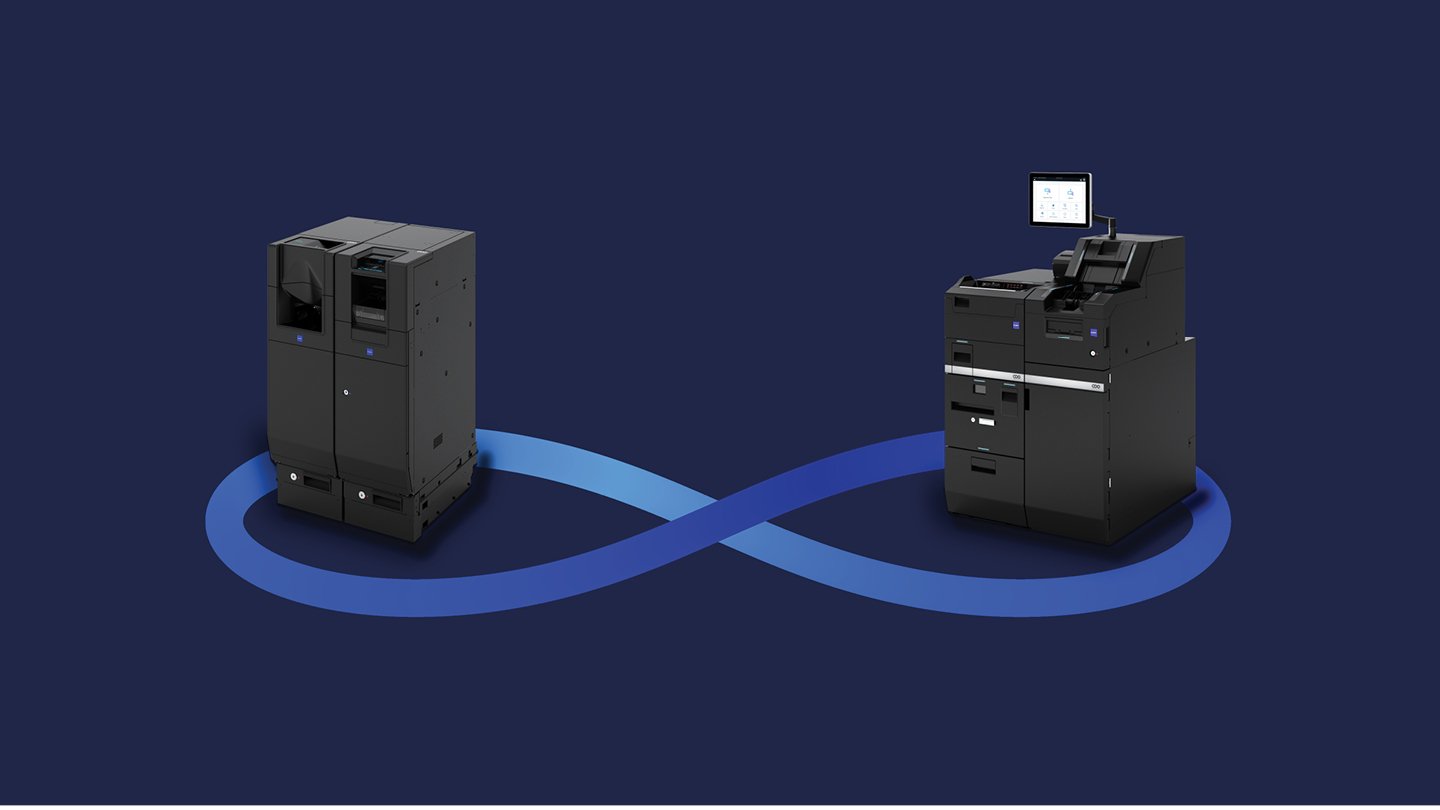
In a closed-loop model, cash flows through a connected chain of cash recyclers instead of passing through human hands at each step. Here’s how it works. A Front-of-store cash recycler at the register or a self-checkout accepts cash payment. The unit automatically authenticates, counts, and validates the banknotes and coins, and dispenses change. The cash is stored inside secure, locked cassettes. When full, these cassettes are moved between the front-of-store device and the back office without staff exposure or manual handling. Back-office recyclers process, reconcile, and store the cash, automatically preparing till floats and deposits for Cash-in-Transit (CIT) services. Software monitors cash levels across the entire enterprise tracking every cash movement. Throughout this process, cash stays inside a controlled, auditable system from the first bill accepted to the final bank deposit.
Security you can build into the process
The biggest risk in cash handling is exposure. Open drawers, manual till counts, and unsealed bags create opportunities for error and theft. Closed-loop movement of cash in secured cassettes means employees do not handle loose bills during transfers. Fewer people touch cash, access is restricted by role, and there is far less opportunity for internal shrink or external theft.
Less shrink, fewer discrepancies
Because recyclers validate and count every note as it enters, cash is verified at the point of acceptance. Counterfeit detection and accurate counting at the source reduce till variances, and the same verified record follows the cash to the back office. When there are no manual recounts between front and back, there are fewer places for errors to hide, and disputes are easier to resolve.
Labor hours back to the sales floor
Manual cash-ups, till counts, change orders, and safe reconciliations consume management and associate time every shift. Closed-loop handling automates most of this work. Cashiers no longer manually count down drawers at shift end, and managers are no longer tied to the safe. For retailers dealing with tight staffing and high turnover, that administrative time can be swapped for quality in-person time with customers.
Real-time visibility and tighter cash control
A connected loop gives finance and operations teams a live view of cash positions across registers, back offices, and stores. Retailers can see how much cash is on hand, forecast replenishment needs, and reduce idle cash sitting in safes. That supports smarter cash-in-transit scheduling, better bank deposit planning, and cleaner reconciliation.
Optimized armored-carrier pickups, lower logistics cost
Because cash is reused for change instead of being constantly ordered and returned, many retailers can reduce change orders and the frequency of armored-carrier pickups. Lower cash-in-transit volume means lower fees and less exposure while cash is in motion.
A better, safer experience for staff and customers
Reducing visible cash handling and trips to the safe makes stores safer places to work. When cashiers are not responsible for making change by hand or balancing a drawer, training is simpler and accountability is clearer. New hires can be productive sooner, and the risk of end-of-shift disputes drops. Customers also benefit from faster, more accurate transactions and fewer checkout delays caused by drawer issues or change shortages.
Built for the way US retailers operate
US retailers face a combination of pressures: labor costs, shrink, cash-handling compliance, and the need to serve customers who still choose cash. Glory's closed-loop approach lets retailers keep accepting cash with confidence while removing the operational burden that makes it costly. Whether the environment is a grocery chain, a big-box store, or a convenience format, the principle is the same: secure cash at the point of sale, transport it in cassettes, move it in sealed form, and verify it end to end.
The bottom line
Cash is here to stay. Manual cash handling does not have to be. Glory’s closed-loop cash management helps US retailers reduce risk, free up staff time, and gain greater visibility and control—from checkout to the back office.
Less handling. More control. More time for customers. That’s the Glory closed-loop advantage.